

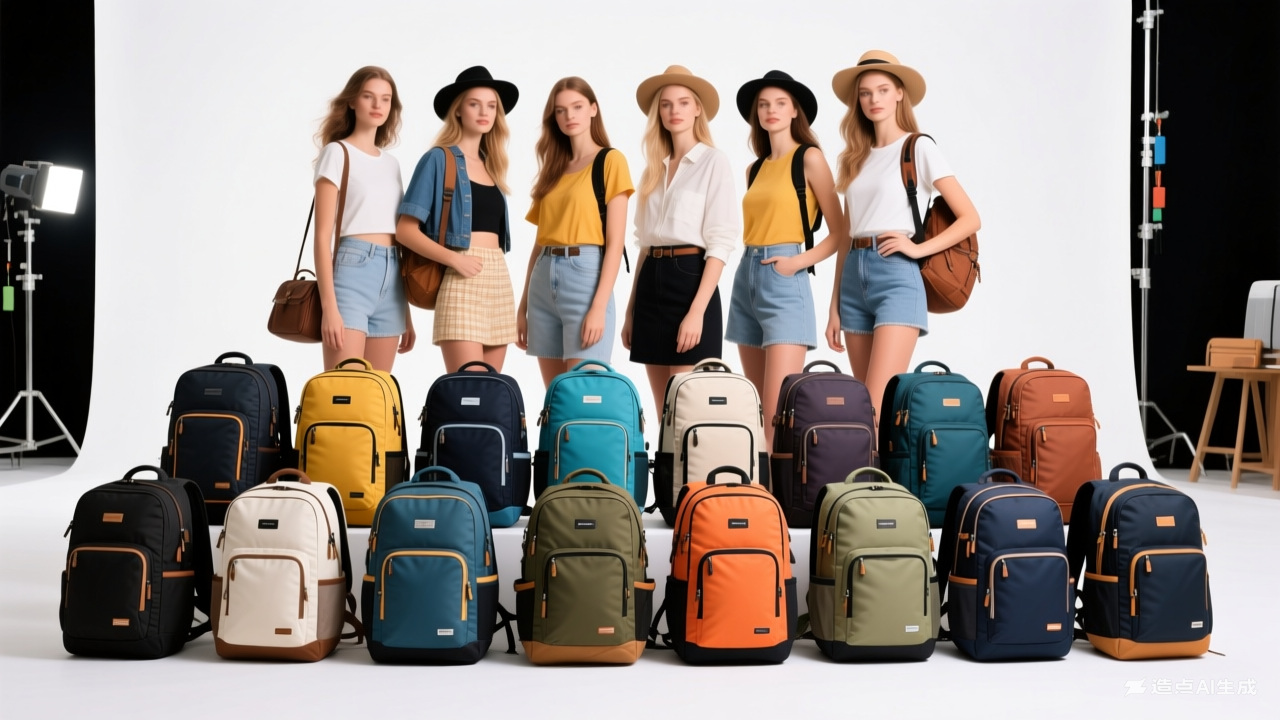
The market is currently undergoing a profound transformation from a simple “carrying tool” to a “symbol of smart living.”
Below are the primary development directions for the global travel backpack market:
- Market Landscape: Regional Differentiation and Channel Transformation
The global travel backpack market is recovering and growing, with significant shifts occurring in consumer preferences and channel structures across different regions:
North America Dominates, Asia-Pacific Grows Fastest: North America currently holds 36.2% of the global market share, representing the largest consumer market. While Asia-Pacific holds 25.1% of the market share, its 7.5% annual growth rate positions it as the most promising emerging market.
Online Sales and Content-Driven E-commerce Rise: Online sales now account for nearly 45.3% of the market, with cross-border e-commerce making a substantial contribution. Short videos and live-streaming e-commerce have become key display platforms, with user engagement rates growing over 200% annually.
Clear Price Segmentation: Mid-range products ($100-$200) hold the largest share (56.4%), while premium products ($200-$300) and professional-grade products ($300+) with specialized features are achieving higher premiums through differentiated designs. - Technology-Driven Transformation: From “Manufacturing” to “Smart Manufacturing”
Technological innovation is reshaping the industry chain, with new materials and intelligent technologies serving as core drivers:
Smart Integration: Backpacks are evolving from static containers into dynamic terminals. Products integrating smart charging (23% penetration rate), GPS positioning, health monitoring (e.g., step counting, posture alerts), and anti-theft alarms are experiencing significant annual growth. Future trends point toward ecosystem integration with smart wearables and in-vehicle systems.
New Material Applications: Lightweighting and functionality are key.
Eco-Friendly Materials: Recycled nylon and bio-based materials are gaining market share, with eco-friendly products using recycled materials growing at a rate of 28%.
High-Performance Materials: Carbon fiber composites, waterproof breathable membranes, antimicrobial linings, and self-healing materials are becoming widespread, addressing pain points like moisture susceptibility and bacterial growth. - Consumer Trends: Three New Battlegrounds
Consumer demand is undergoing structural shifts, primarily centered on personalization, scenario-specific functionality, and sustainability:
Customization and Personalization: Consumers no longer settle for standardized products, with 70% willing to pay a premium for customization. Brands leverage digital design tools and flexible supply chains to offer “one-of-a-kind” services for appearance, functional modules, and even sizing.
Scenario Segmentation:
- “Outdoor+” Fusion: Blurring the lines between “outdoor adventure” and “urban commuter” travel, backpacks that blend outdoor protection with urban style are increasingly popular.
Vertical Segmentation: Specialized categories are booming: anti-theft briefcases with wireless charging for professionals, avalanche airbag ski packs for outdoor enthusiasts, and temperature-controlled storage bags for parents and infants.
Green as a Must: Sustainability has evolved from a “gimmick” to a “must-have.” Over 60% of consumers (especially younger demographics) are willing to pay a 20%-30% premium for eco-friendly materials. Closed-loop recycling systems (e.g., plastic bottles turned into fabric) and green manufacturing processes are becoming standard for brands.
Competition and Business Models
Diversified Brand Landscape: Professional outdoor brands compete with mass-market players, while cross-industry entrants—tech companies leveraging hardware strengths and sportswear brands utilizing material expertise—intensify competition.
Semi-managed models facilitate overseas expansion: For Chinese manufacturers, leveraging cross-border e-commerce platforms’ “semi-managed” models (providing logistics and marketing services) is emerging as an effective shortcut to penetrate European and American markets, particularly in the mid-to-low price segments.
Cultural empowerment: Cultural elements like domestic trends, museum collaborations (e.g., V&A Museum), and esports IPs are becoming crucial tools for enhancing brand value and attracting Gen Z consumers.
